Londonderry
The Good ShepherdLondonderry serves as a practical destination and a fragile promise of reunion: Krause considers whether the depleted James can reach it safely, then invokes it as the place where he expects to meet her captain again. The port remains a hoped-for destination rather than a confirmed arrival, and that uncertainty gives the name its weight.
A Safe Port in the Calculation
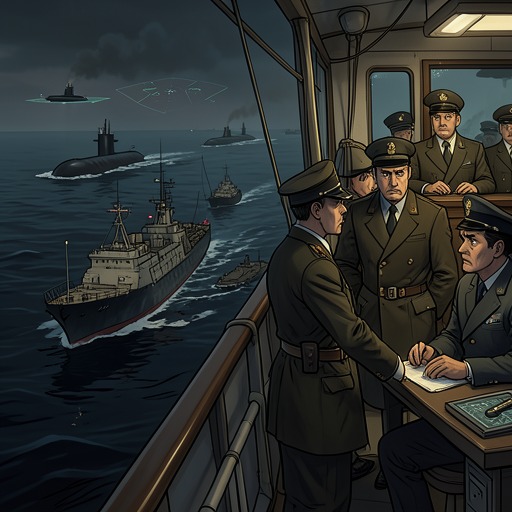
When James reports that prolonged action has left her critically low on fuel and with only nine depth-charges, Krause recognizes that detaching her would allow her to make Londonderry safely at economical speed. Keeping her with the escort, however, would preserve her guns, remaining charges, and sonar as useful defenses for the convoy. He decides that her contribution still matters and orders her to continue using fuel and ammunition with the utmost economy. Londonderry is thus the safer alternative for one ship, set against the danger her departure could bring to the larger convoy.
A Destination Under Tow
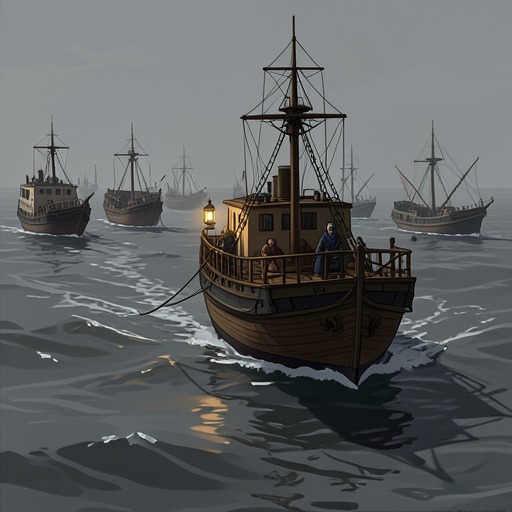
Krause also considers whether James might be kept with the escort until air cover becomes available the following day; if the ships survive the intervening day and night, he thinks a merchant vessel could take her in tow. Later, as the towing hawser is going out and the strain is about to come on, James’s captain sends a farewell in case they do not meet again. The exchange confirms that a tow is beginning, but does not establish that James reaches Londonderry.
A Promised Meeting
Krause answers the captain’s goodbye by saying that he is looking forward to seeing him in Londonderry. The place name turns a matter of navigation and survival into a restrained expression of hope: rather than dwell on the possibility of not meeting again, Krause frames their separation around a future encounter. Londonderry therefore marks both the safe destination considered for James and the uncertain reunion Krause chooses to anticipate.